
The pleasure and value of repair

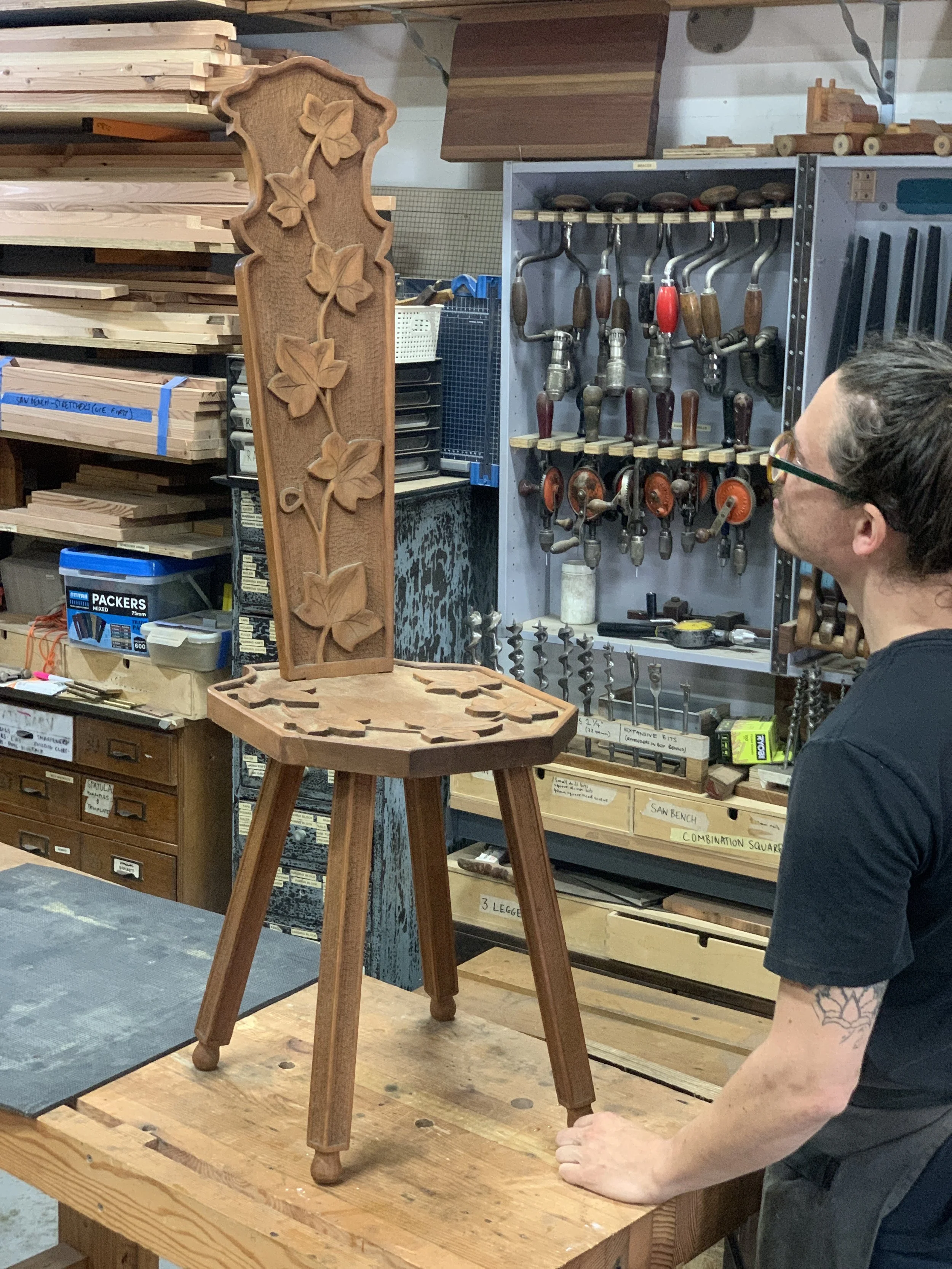
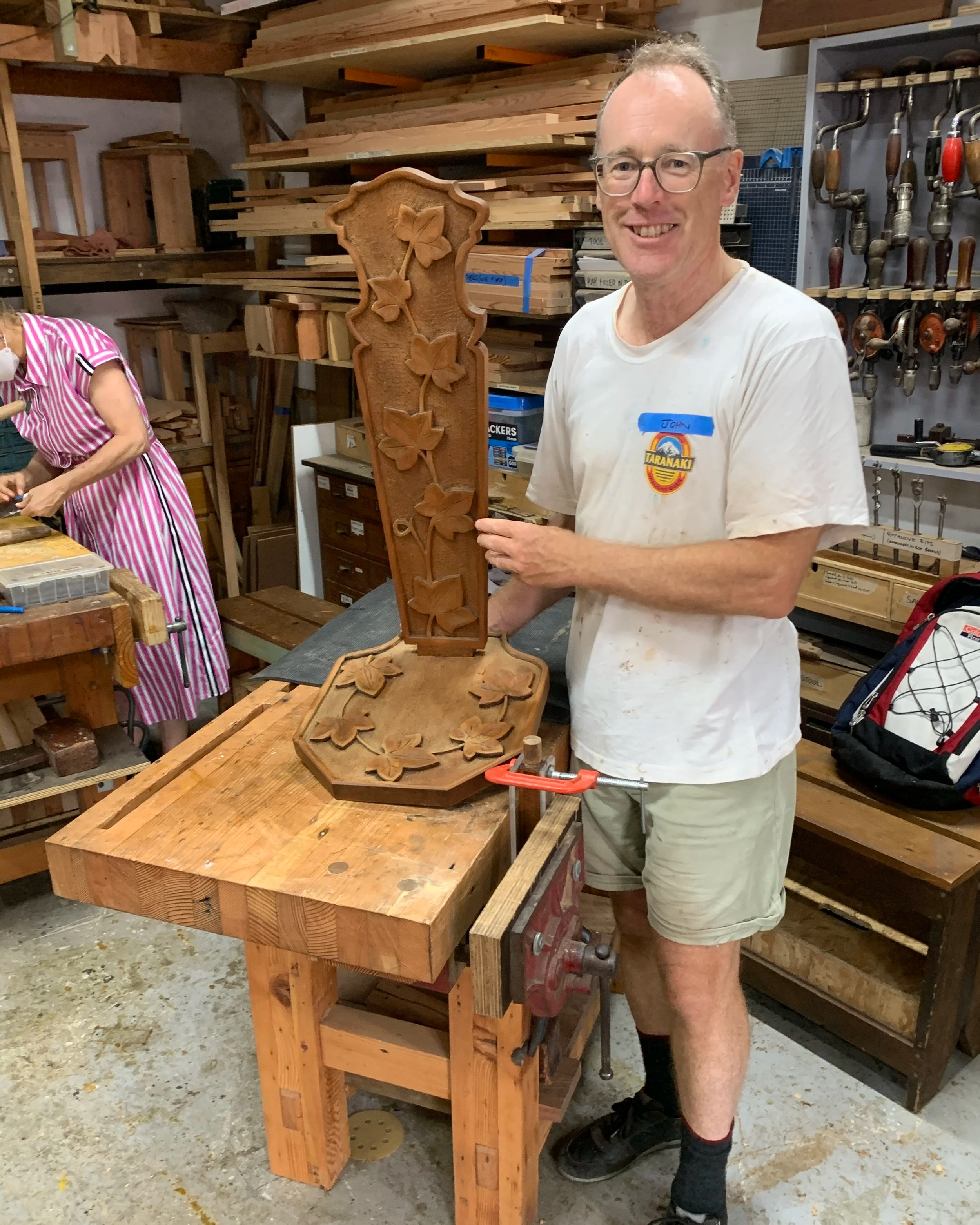
This is John Fox with the carved stool made by his Grandfather that he brought to our furniture repair workshop.
.
There are a lot of things I love about this stool and its repair and they do a good job of highlighting what I like about repair more broadly.
The history.
The stool was made by John’s grandfather as part of a rehabilitation program after World War I. Once repaired, John plans to send it to his brother in England. Three generations. At least three countries. One much loved object. Item’s like this hold stories and a history that modern factories cannot reproduce and to me that is where much of the value lies.
The lessons.
The stool is carved from Kauri pine - a beautiful timber, lovely to work - but not ideal for staked joinery. Over time, the soft wood has compressed where the legs meet the seat, and the joints have loosened. Working on repair projects like this gives us a deeper understanding of the potential failings of certain design and material choices, and informs the decision we make when building furniture. Hopefully these are decisions that will lead to longer lasting and more repairable furniture. I love the insights like this that come from repair. They have made me a far more knowledgeable woodworker than I would have been otherwise.
The creativity.
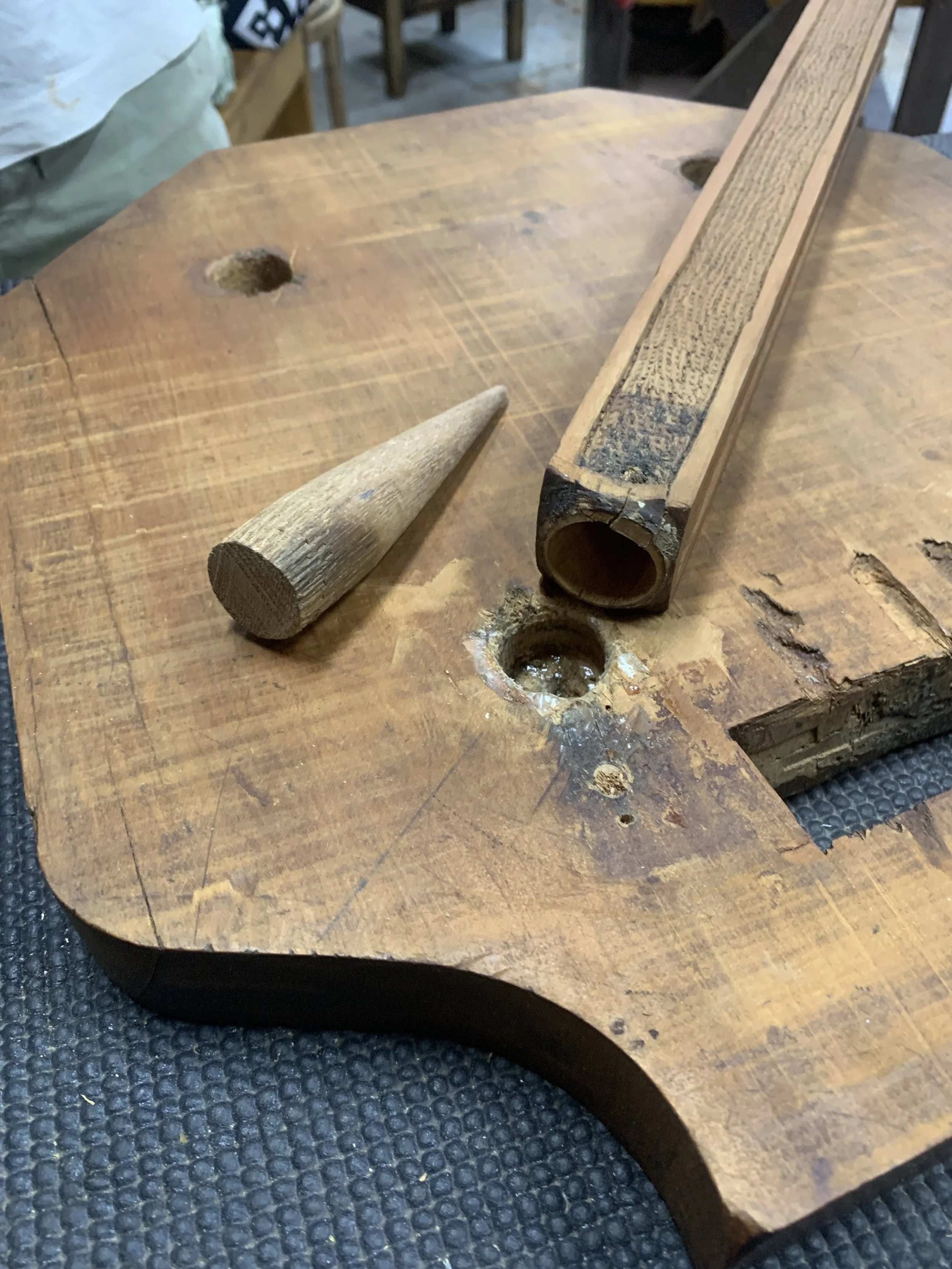
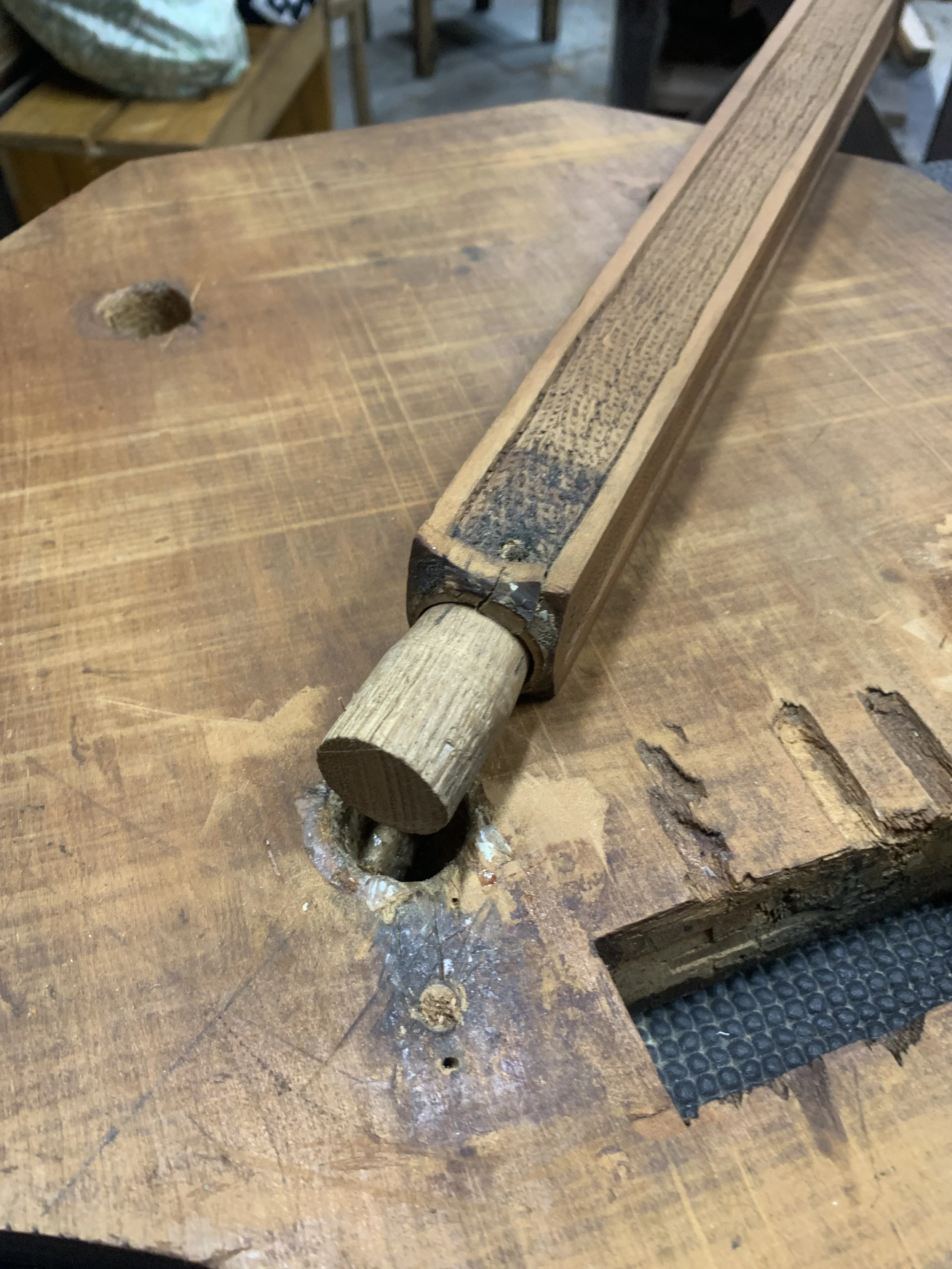
The repair itself was an interesting one that I haven't tried before. The tenon on one of the legs was badly damaged due to some well-intentioned but misguided previous-repair attempts (FYI don't jam nails or screws into loosened joinery as a fix. They don't last and almost always do more damage than good). The tenon also almost spanned the thickness of the leg. This meant drilling for a straight dowel to replace the tenon risked weakening the leg and blowout. Shane (pictured belowed), who leads the course and an experienced conservator, came up with the idea of reaming a tapered mortise into the leg to receive a conical tenon that we turned on the lathe. This allowed for good glue surface connection without risking weakening the leg. Clever. Creative repairs like this deepen one's technique-toolbox and make for more well rounded woodworkers.
I love all these things but there’s something else I value about repair even more. Repair and reuse keep items in use and out of landfill. It challenges the unsustainable business model of built-in obsolescence and reduces the demand for new production and the carbon that comes with it.
It’s fun, interesting and sentimental but it’s also important.
-Luke